Certified Private Wealth Professional (CPWP) Module 1 Paper 2 Free Trial

What we show here is merely the examination format HKSIDataBase quizzes adhere to. In our premium subscription version, all our questions are updated frequently from time to time base on the real examination requirement. 

Premium Practice Questions

CPWP Module 1 Paper 2: Free Structured-Question Sample

Two original, scenario-based practice sets for Wealth Management, presented in the style of the official open-ended examination component.

Free public preview 2 complete case questions 50 marks per case Topics 6–10
Sample structured question 1 Total: 50 marks

Family Business Succession

Customer profile

Ms Grace Wong is 62 and lives in Hong Kong with her husband, aged 64. She founded and owns all the shares in Prosper Foods Limited, a Hong Kong family-owned food manufacturing business. Her total net worth is approximately HKD180 million. This consists of shares in Prosper Foods valued at HKD110 million, a HKD45 million investment portfolio held solely in her name, a jointly owned family home valued at HKD18 million and HKD7 million in bank deposits.

Ms Wong plans to retire in about two years. She wants the business to remain under family control and hopes that her son, Adrian, aged 34, will take over its management. Adrian has worked in the business for eight years and is currently its operations director. Ms Wong’s daughter, Bella, aged 30, is a doctor and has never worked in the business. Ms Wong wants both children to receive fair economic benefits but does not want disagreement over ownership to disrupt the business. The family has never held a formal meeting about succession. There is no documented business-succession plan, and Ms Wong has not reviewed her personal estate arrangements for more than ten years.

Prosper Foods plans to construct a new production facility. The company may borrow HKD30 million to fund it. Ms Wong is worried that the lender may seek a personal guarantee and that a business setback could place family wealth at risk. She also wants a reliable income after retirement.

Ms Wong’s personal investment portfolio is concentrated in Hong Kong and US listed shares. She is too busy to review it regularly. During your meetings, she describes two aspects of her recent investment behaviour:

  • She judges an investment decision as good whenever it produces a short-term profit, even if the decision was inconsistent with her agreed investment plan or was made without adequate research.
  • She credits profitable trades to her own skill but blames losing trades entirely on unexpected market events. Her trading frequency has increased after several recent gains.

Ms Wong was previously served by a highly regarded private wealth manager who recently left your bank. You took over the relationship four months ago. Ms Wong is highly attractive to the bank because of her present and potential business. She has told you that she values the bank’s capabilities, has been pleased with your advice and would consider consolidating more family assets with the bank. Your assessment therefore places the relationship in the strong-mutual-attraction quadrant of the attractiveness-positioning matrix.

Based on the information provided, answer all questions below.

Required questions

Question 1 — Wealth Planning (25 marks)

  1. Recommend TWO relevant business-succession solutions for Ms Wong. Explain ONE merit of each solution by reference to her wish for Adrian to manage the business, fair economic provision for both children, continuity of family control and/or retirement income. Identification: 4 marks; application: 2 marks; total: 6 marks
  2. Identify TWO material issues concerning Ms Wong’s personal wealth succession or estate planning. Recommend THREE relevant wealth-planning solutions that could address the identified issues, and explain how each solution is relevant to the case. Issues: 4 marks; solutions and application: 9 marks; total: 13 marks
  3. Apart from business succession and personal wealth succession, identify TWO other wealth-planning needs shown in the case. Give ONE case-specific reason for each need. Needs: 4 marks; supporting reasons: 2 marks; total: 6 marks

Question 2 — Behavioural Finance (10 marks)

  1. Identify the TWO behavioural biases demonstrated by Ms Wong. For each bias, cite the relevant behaviour in the case and state ONE possible adverse investment consequence. Identification and evidence: 4 marks; consequences: 2 marks; total: 6 marks
  2. Recommend ONE practical method by which the private wealth manager could moderate the effect of each bias on Ms Wong’s planning or investment decisions. 4 marks

Question 3 — Customer Relationship Management (15 marks)

  1. With reference to the attractiveness-positioning matrix:
    1. Explain what the strong-mutual-attraction classification means for the relationship between Ms Wong and the bank. 3 marks
    2. Recommend THREE actions you should take to maintain and develop the relationship. Apply each action to Ms Wong’s circumstances. 6 marks
  2. Recommend TWO proactive customer-retention actions that could preserve the bank’s relationship with the Wong family across the transfer of business and personal wealth to the next generation. Explain why each action is appropriate. 6 marks
Show detailed suggested answer and marking guidance

Suggested Answer — Question 1: Wealth Planning

(a) Business-succession solutions

Any two well-supported solutions may be credited. Suitable possibilities include:

  • Restructure voting, management and economic rights: Ms Wong could consider a properly advised share restructuring under which Adrian obtains appropriate management or voting control while Ms Wong retains an economic interest, such as dividend-bearing rights, during retirement. Bella could receive non-voting economic interests or other assets of comparable value. This separates control from economic benefit, supports Adrian’s management role and may provide Ms Wong with retirement income.
  • Family trust holding company shares: a trust may hold selected shares for family beneficiaries under defined terms. Governance provisions could support continuity of family ownership, permit Adrian to manage the operating business and provide economic benefits for Bella. The settlor’s desired control, trustee powers, beneficiary interests, jurisdiction, cost and tax consequences must be examined.
  • Shareholders’ or family agreement: if ownership will be shared, an agreement can document voting, dividend policy, transfers, entry into management, dispute resolution, death/incapacity and exit. This reduces the risk that disagreement between Adrian and Bella disrupts Prosper Foods.
  • Phased transfer with a documented succession plan: Ms Wong could transfer responsibility in stages, set milestones for Adrian, identify emergency leadership and agree how the board will supervise the transition. This tests readiness and reduces key-person dependence.

(b) Personal wealth-succession or estate issues

Material issues include:

  • Her estate arrangements are more than ten years old and may no longer reflect the family, asset values or intended treatment of the children.
  • The HKD45 million portfolio is held solely in her name, creating possible continuity and liquidity problems on death or incapacity.
  • Most wealth is concentrated in private-company shares, which may be illiquid and difficult to divide fairly.
  • There is no clear plan for reconciling Adrian’s business role with Bella’s economic provision.

Potentially relevant solutions include:

  • Review the will and wider estate plan: obtain legal advice and coordinate the will with company-share arrangements, account ownership, beneficiary designations and any trust. This helps ensure the current wishes are documented consistently.
  • Trust planning: a suitably designed trust may provide continuity, professional administration and defined benefits for family members. It may also address control of business shares, but it is not automatically suitable and requires full legal and tax analysis.
  • Insurance for liquidity or equalisation: appropriate coverage may create cash on death, support dependants or provide value for Bella if Adrian receives a larger interest in the business. Coverage, ownership, premiums and beneficiaries must fit the plan.
  • Incapacity and account-continuity arrangements: valid powers or mandates, and an appropriately advised review of sole versus joint ownership, may reduce disruption if Ms Wong cannot act. These arrangements can affect ownership and succession outcomes and must be implemented carefully.
  • Family office or coordinated reporting: if justified by complexity and cost, an internal, outsourced or multi-family-office arrangement may coordinate investments, governance and external advisers. It does not replace the underlying legal documents.

A high-scoring response links three solutions to the two issues identified rather than listing structures without explaining their purpose.

(c) Other wealth-planning needs

  • Debt planning: the proposed HKD30 million borrowing and possible personal guarantee could expose family wealth to business risk. Terms, repayment capacity, collateral and limits on personal liability should be reviewed.
  • Risk management and asset protection: Ms Wong is concerned about protecting family wealth from a business setback. The ownership structure, guarantees, insurance and separation of business and personal assets require analysis.
  • Retirement and lifetime cash-flow planning: she retires in about two years and wants reliable income. Required spending, expected dividends, liquidity and longevity should be modelled rather than assumed.
  • Investment and liquidity planning: her HKD45 million portfolio is concentrated and not regularly reviewed. The portfolio should be assessed against retirement objectives, liquidity requirements, time horizon and risk tolerance/capacity.
Indicative marking — 25 marks: (a) 2 marks for each of two relevant solutions and 1 mark for a case-specific merit of each, total 6. (b) 2 marks for each of two material issues and up to 3 marks for each of three relevant, applied solutions, total 13. (c) 2 marks for each of two needs and 1 mark for each supporting case fact, total 6.

Suggested Answer — Question 2: Behavioural Finance

(a) Biases and consequences

  • Outcome bias: Ms Wong judges a decision as good merely because it produced a short-term profit, without evaluating the research or whether it followed the agreed plan. This can reinforce a poor decision process, encourage unsuitable holdings and cause her to abandon disciplined planning.
  • Self-attribution bias: she credits gains to personal skill but blames losses on external market events. This can produce excessive confidence, increased trading, underestimation of risk and resistance to contrary advice.

(b) Moderating the biases

  • For outcome bias, agree objective decision criteria before investing, use a decision journal and assess both process and outcome at reviews. Compare each decision with the agreed investment plan rather than judging it solely by recent profit.
  • For self-attribution, compare results with an appropriate benchmark and the risk taken, review gains and losses symmetrically, and require documented research and position limits before additional trades.
Indicative marking — 10 marks: 2 marks for each correctly identified and evidenced bias, 1 mark for a plausible consequence of each, and 2 marks for one practical mitigation method per bias.

Suggested Answer — Question 3: Customer Relationship Management

(a)(i) Matrix classification

Strong mutual attraction means Ms Wong is highly attractive to the bank and she also sees high value in the bank and current relationship. She belongs in a priority relationship segment that should be actively nurtured. The position is not permanent: the recent manager transition creates a risk that the customer’s attraction may weaken if continuity and trust are not maintained.

(a)(ii) Maintain and develop the relationship

  • Agree a purposeful contact and review plan covering retirement, the borrowing, portfolio concentration and succession rather than relying on product contact.
  • With consent, introduce relevant specialists in family-business succession, wealth planning, investment and credit so that Ms Wong receives coordinated expertise.
  • Demonstrate continuity after the former manager’s departure through a documented relationship plan, reliable follow-up and a wider service team.
  • Provide relevant education, briefings or events aligned with family-business and next-generation needs, avoiding generic invitations.

(b) Intergenerational retention

  • With Ms Wong’s permission, begin relationships with her husband, Adrian and Bella. Understand each person’s role, objectives, communication preference and financial knowledge rather than treating them only as future asset recipients.
  • Facilitate appropriate family discussions about management, ownership, economic fairness and the planning horizon, supported by relevant specialists and external advisers.
  • Offer suitable next-generation education and digital engagement, and ensure the bank can continue service through retirement, incapacity and wealth transfer.
Indicative marking — 15 marks: 3 marks for explaining the matrix position; 2 marks each for three case-applied development actions; and 3 marks each for two proactive, explained retention actions.
Exam technique: Use the customer’s facts in every paragraph. A generic list of trust, insurance and relationship actions will not demonstrate application.
Sample structured question 2 Total: 50 marks

Cross-Border UHNWI Relationship

Customer profile

Mr Daniel Zhao is 49 and founded a technology-services group in the Chinese Mainland. A proposed sale of part of the group may create substantial liquidity within the next 18 months. He currently holds interests in the operating group, residential property and personal investments with several institutions. Some investments are held onshore in the Chinese Mainland and others are booked in Hong Kong. He has not prepared a consolidated record of his assets, liabilities, cash flows, ownership arrangements or existing insurance.

Mr Zhao is married. His wife takes no part in the business. They have a daughter, aged 21, studying in Singapore and a son, aged 16, attending school in the Chinese Mainland. Mr Zhao also supports his elderly parents. He wants to provide for all family members, protect family assets, prepare for retirement and avoid disruption if he dies or becomes incapacitated. He is considering whether a trust, insurance solution, foundation, private label fund or family office could help, but he does not understand the different purposes of these solutions. He has not yet stated how much control he wishes to retain or how family members should benefit.

The customer wants to diversify after the partial business sale while retaining a meaningful interest in the group. However, the quoted value of his investment portfolio recently fell below its previous peak. He treats that peak as the value the portfolio “should” have and refuses to reduce several risky positions until it returns to that level. He is now willing to accept even greater investment risk in an attempt to recover the perceived loss quickly.

Mr Zhao was introduced to you by his accountant and is still a prospect. He values cross-border capabilities, coordinated professional expertise, confidentiality and reliable digital access. Your bank regards him as highly attractive, but he has not yet formed a view of you or the bank. During the first meeting, he asks immediately for product ideas. He provides only broad estimates of his wealth and has not explained his risk tolerance, objectives, time horizons, family priorities, tax position or liquidity needs.

One week after the meeting, a member of your team sends Mr Zhao an incomplete summary of his requirements and fails to return an urgent call. Mr Zhao complains that the service does not match the bank’s promise of coordinated advice. The relationship can still be recovered, but he expects a prompt and credible response.

Mr Zhao also asks how a Hong Kong private wealth manager could serve a Chinese Mainland entrepreneur with both onshore and offshore assets. He is particularly concerned about the differences between onshore and offshore investment choices and about legal and regulatory constraints on cross-border activity. He expects any recommendations to comply with all applicable requirements.

Based on the information provided, answer all questions below.

Required questions

Question 1 — Customer Relationship Management (15 marks)

  1. Before discussing particular products, identify THREE objectives of the initial engagement and fact-gathering process that are especially important in Mr Zhao’s case. Explain how the information obtained under each objective would support suitable planning. 6 marks
  2. Distinguish between Mr Zhao’s immediate and future needs. Identify and justify TWO immediate priorities and TWO future priorities that should be recorded and addressed through the relationship-management process. 4 marks
  3. Design a service-recovery response to Mr Zhao’s complaint. State THREE actions the bank should take and explain how those actions could restore the customer experience and strengthen the prospective relationship. 5 marks

Question 2 — Wealth Planning (15 marks)

  1. Apply THREE stages of the wealth-planning process to Mr Zhao’s circumstances. For each stage, state what the private wealth manager should do and cite relevant case information. 6 marks
  2. Identify THREE distinct wealth-planning needs in the case. For each need, recommend ONE potentially relevant solution or planning approach from the Paper 2 syllabus and explain its purpose in Mr Zhao’s circumstances. Do not treat any solution as automatically suitable before the missing customer information has been obtained and analysed. 9 marks

Question 3 — Behavioural Finance (8 marks)

  1. Using prospect theory, explain how a reference point, loss aversion and risk attitude may be influencing Mr Zhao’s refusal to reduce the risky positions. 4 marks
  2. Recommend TWO practical methods for moderating the effect of this behaviour during planning, implementation, monitoring and review. 4 marks

Question 4 — Overview of the Private Wealth Management Industry (6 marks)

Identify TWO needs or preferences commonly relevant to an ultra-high-net-worth individual that are also evident in Mr Zhao’s case. For each, explain how an appropriate private wealth management structure, service or coordinated business model could help meet the need while supporting a sustainable customer relationship.

Question 5 — Overview of PWM Markets: Hong Kong, the Chinese Mainland and Asia-Pacific (6 marks)

  1. Identify TWO issues that a Hong Kong private wealth manager should consider when serving a Chinese Mainland customer who has both onshore and offshore assets. At least ONE issue must concern the legal or regulatory constraints affecting cross-border private wealth management business. 4 marks
  2. Explain ONE way in which wealth-planning and asset-allocation services could enhance the private wealth manager’s relationship with Mr Zhao. 2 marks
Show detailed suggested answer and marking guidance

Suggested Answer — Question 1: Customer Relationship Management

(a) Initial engagement and fact-gathering objectives

  • Establish the relationship and scope: explain the manager’s role, confidentiality, services, limitations, fees and the need for legal/tax/regulatory advice. Confirm which family members, entities and jurisdictions are within scope and how decisions will be made.
  • Create a verified wealth map: obtain assets, liabilities, ownership, location, cash flows, insurance, existing structures, advisers and the expected partial-sale details. This is necessary because Mr Zhao currently gives only broad estimates and has no consolidated record.
  • Recognise and prioritise needs: identify family support, protection, incapacity, retirement, succession, post-sale diversification and service expectations. Qualify each objective by purpose and priority and quantify amount, currency and timing.
  • Evaluate tolerances and constraints: establish risk tolerance, risk capacity, investment knowledge, liquidity, time horizons, tax position and legal/regulatory constraints before discussing products.

Any three fully explained objectives should receive credit.

(b) Immediate and future priorities

Immediate priorities may include:

  • Repair the service failure, correct the incomplete summary and respond to the urgent call.
  • Complete fact gathering and establish ownership, source, location and transferability of assets before product recommendations.
  • Assess the risky positions, liquidity and behavioural risk without making an uninformed sale recommendation.
  • Clarify the partial-sale timing and its possible liquidity, concentration and planning consequences.

Future priorities may include:

  • Develop a post-sale diversification and long-term asset-allocation plan.
  • Plan retirement and lifetime cash flow.
  • Create succession, incapacity and protection arrangements for the spouse, children and parents.
  • Assess whether a trust, insurance solution, foundation, private label fund or family-office service fits defined needs.

(c) Service recovery

  1. Acknowledge, listen and apologise promptly: contact Mr Zhao through his preferred channel, allow him to describe the impact and accept responsibility without blaming another team.
  2. Correct the failure: provide an accurate revised summary, return the urgent call, identify one accountable contact and agree the immediate next action.
  3. Prevent recurrence and follow up: investigate why the call and summary failed, improve hand-offs and quality checks, confirm communication standards and later check whether confidence has been restored.

A credible response addresses both the operational error and the loss of trust. It may convert an early failure into evidence that the institution is responsive and accountable.

Indicative marking — 15 marks: (a) up to 2 marks for each of three applied objectives; (b) 1 mark for each justified immediate or future priority, maximum 4; (c) up to 5 marks for three coherent recovery actions and their relationship benefit.

Suggested Answer — Question 2: Wealth Planning

(a) Applying three process stages

  • Establish the relationship: define scope, responsibilities, confidentiality and adviser boundaries across the family, business and jurisdictions.
  • Gather information: obtain a consolidated balance sheet, cash flows, ownership, liabilities, insurance, sale expectations, family obligations, objectives, liquidity, horizons, risk profile, tax position and control preferences.
  • Analyse: test liquidity and lifetime cash flow, identify concentration in the group and risky positions, distinguish current assets from uncertain sale proceeds, and assess protection, retirement and succession gaps.
  • Plan: prioritise objectives and design coordinated investment/liquidity, risk-management, retirement, succession and cross-border recommendations with reasonable alternatives.
  • Implement: obtain informed agreement, coordinate qualified advisers, allocate responsibilities and put only suitable, permitted solutions in place.
  • Monitor and review: review after the business sale, family or residence changes, market movements and legal/regulatory developments.

Any three stages should be clearly applied to Mr Zhao rather than merely named.

(b) Needs and potentially relevant solutions

  • Consolidation and oversight: verified consolidated reporting or an appropriately scaled family-office service may coordinate multiple institutions, ownership arrangements and advisers. A family office is not automatically justified; cost, control and complexity matter.
  • Succession and incapacity: coordinated wills, valid authority arrangements, account review and possibly a trust may improve continuity and provide for the spouse, children and parents. Legal and tax advice is essential.
  • Family protection and liquidity: insurance may provide liquidity or protect dependants following death or disability, subject to suitable coverage, ownership, beneficiaries and affordability.
  • Post-sale investment and liquidity: a staged asset-allocation and liquidity plan may diversify concentration while retaining the agreed business interest and funding foreseeable family needs.
  • Retirement: a lifetime cash-flow plan should quantify spending, income, longevity, support obligations and the uncertain timing/value of sale proceeds.
  • Purpose or philanthropy: if a genuine objective emerges, a foundation or another suitable arrangement may organise governance and distributions. It should not be proposed merely because Mr Zhao mentioned the term.
  • Investment structure: a private label fund may be considered for eligible assets where scale, tailored management, costs, liquidity and regulation support it. It is not a substitute for estate or family governance planning.
Indicative marking — 15 marks: (a) 2 marks per correctly applied stage, maximum 6; (b) 3 marks for each of three needs linked to a suitable approach and its case-specific purpose, maximum 9.

Suggested Answer — Question 3: Behavioural Finance

(a) Prospect-theory explanation

  • Reference point: Mr Zhao uses the previous portfolio peak as the benchmark and frames the current value as a loss, even though that peak may have no relevance to today’s best decision.
  • Loss aversion: recognising the decline causes disproportionate discomfort, encouraging him to delay reducing unsuitable positions.
  • Risk attitude: after framing himself in the loss domain, he becomes willing to accept greater risk to return quickly to the reference point. This is risk-seeking behaviour in perceived losses.

(b) Moderating the behaviour

  • Reframe the choice as the best use of current wealth to meet future objectives, not as a requirement to “recover” to the old peak. Present balanced scenarios in money and percentages.
  • Agree an investment plan, diversification parameters, position limits and decision rules before implementation; use staged changes if appropriate and suitable.
  • At reviews, compare decisions with the agreed process and objectives, use a decision journal and avoid reacting solely to short-term outcomes.
Indicative marking — 8 marks: up to 4 marks for explaining the reference point, loss aversion and risk attitude using case facts; 2 marks for each of two practical mitigation methods.

Suggested Answer — Question 4: Overview of the PWM Industry

  • Complex, consolidated oversight: Mr Zhao has business, property and investments across institutions and locations. Coordinated reporting, a lead relationship manager and possibly an outsourced or multi-family-office service may create a reliable total view and organise specialists.
  • Family succession and continuity: he supports several generations and wants continuity on death/incapacity. Integrated wealth planning can coordinate ownership, protection and professional advice rather than sell a single product.
  • Cross-border capability: onshore and offshore assets require location-aware service and regulatory discipline. A coordinated model should use permitted channels and qualified local expertise.
  • Confidential, reliable digital service: controlled access, accurate reporting, privacy and responsive human support directly reflect his stated preferences.

Any two needs earn full credit when the answer explains both the relevant structure/service and how it supports a sustainable relationship.

Indicative marking — 6 marks: 1 mark for each of two relevant UHNWI needs and 2 marks for each applied structure or coordinated service explanation.

Suggested Answer — Question 5: Hong Kong, Mainland and Asia-Pacific PWM Markets

(a) Cross-border issues

  • Legal and regulatory permissions: determine where solicitation, advice, execution and other activity occur; whether the Hong Kong manager or a relevant entity is authorised; and which approved channels may be used. The manager must not conduct unauthorised activity in the Chinese Mainland.
  • Ownership, source and transferability: verify who owns each asset, source of wealth/funds, whether funds are onshore or lawfully offshore, and whether foreign-exchange or capital-movement rules permit a proposed action. Do not assume assets can simply be moved offshore.
  • Product eligibility and suitability: confirm investor and product eligibility, objective, risk, liquidity, horizon and applicable offering requirements.
  • Tax, succession, data and reporting: cross-border differences require qualified advice and appropriate controls for information transfer and confidentiality.

(b) Enhancing the relationship

A verified global wealth plan and location-aware asset allocation can connect Mr Zhao’s onshore and offshore assets to family liabilities, currencies, liquidity needs and time horizons. Coordinated reporting and regular review improve transparency, while candid explanation of legal boundaries builds trust. This turns the relationship from product selection into continuing advice relevant to the partial sale, diversification and family succession.

Indicative marking — 6 marks: 2 marks for each of two explained issues, including at least one legal/regulatory constraint; and 2 marks for an applied explanation of how planning/allocation strengthens the relationship.
Exam technique: Do not invent a cross-border transfer route or numeric limit. Identify the constraint, the facts that must be verified and the compliant next step.
View syllabus alignment for these samples

Sample 1

  • Topic 6 — Wealth Planning: planning needs and process; investment/liquidity planning; risk management and asset protection; debt planning; business succession; retirement; succession and estate planning; trusts, insurance and family-office considerations; family-business challenges and succession plans.
  • Topic 7 — Behavioural Finance: impact of behavioural biases; biases during planning and investment decisions; methods for moderating customer biases.
  • Topic 8 — Customer Relationship Management: attractiveness-positioning matrix; relationship-development strategy; customer maintenance and retention; retention across wealth transfer.

Sample 2

  • Topic 6 — Wealth Planning: information gathering, analysis, planning, implementation, monitoring and review; liquidity, risk-management, retirement and succession needs; trusts, insurance, foundations, private label funds and family offices.
  • Topic 7 — Behavioural Finance: prospect theory; perceived losses; framing against a reference point; loss aversion; risk attitudes; behavioural considerations throughout planning.
  • Topic 8 — Customer Relationship Management: prospecting; initial engagement; fact gathering; immediate and future needs; customer experience and service recovery.
  • Topic 9 — Overview of the PWM Industry: UHNWI needs; products and services; PWM business models and structures; meeting customer needs and satisfying regulatory requirements.
  • Topic 10 — Overview of PWM Markets: onshore and offshore investments for Chinese Mainland customers; constraints affecting offshore managers; role of wealth planning and asset allocation in relationships with Chinese HNWIs/UHNWIs.

Want To Get More Free Practice Questions?

Input your email below to receive Part Two immediately

Start Set 2 With Google Login

What Do You Get When You Enable Full Access

Gain An Unique Advantage

Significantly increase your pass rate, save you a tremendous amount of time and money. 

Success At Your Fingertip

Support all desktop, mobile, tablet, and devices. No system installation is needed. Start in one minute.

Video Study Notes

For all English users, each HKSI exam paper module comes with three sets of audio notes (close to three hours) so that you can study by listening to our audio during your commute time. The video study notes also come with subtitles so that you can learn with ease and keep yourself attentive to the study materials.

Question:

Explain the Takeovers and Mergers Code in Hong Kong.

Answer:

The Takeovers and Mergers Code provides a framework for the conduct of takeovers, mergers, and share repurchases involving public companies in Hong Kong. It aims to ensure fair treatment of all shareholders, transparency in the process, and that shareholders have sufficient information to make informed decisions. The Code is administered by the SFC's Takeovers and Mergers Panel, which oversees compliance and adjudicates disputes. Violations of the Code can result in penalties and sanctions.

Study Flashcard

To reinforce your study memories, leverage our carefully crafted flashcards to help you prepare for the exam. The flashcards are readily available on any handheld device and help you improve your study efficiency.

Study Mindmap

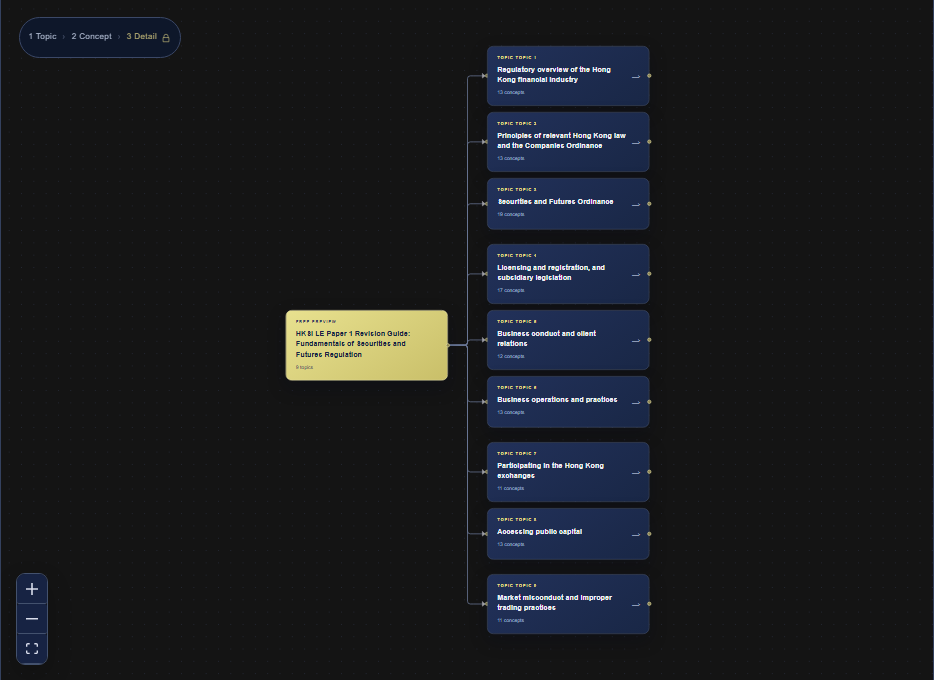
With premium access, each exam paper includes a comprehensive study mind map, designed to give you a holistic understanding of the key concepts and highlight any gaps in your knowledge. Often, when faced with an exam, we feel unsure about how to approach it.

This tool provides a clear and structured overview, helping you navigate the material more effectively.

Invest In Yourself For Less Than A Coffee A Day

CPWP Module 1 English (Paper 1 & 2) (30 Days)

30 Days Unlimited Access
Last Updated:18 August 2026

3000 Practice Questions

Instant Access
Study Anywhere
Key Study Notes
Study Flashcard
Final Mock Exam
All Device Supported
3 Hours of Video Study Materials
One Year Until You Pass Guarantee
Just HKD55/day

One-time payment, no recurring fees.

CPWP Module 2 English (30 Days)

30 Days Unlimited Access
Last Updated:18 August 2026

1050 Practice Questions

Instant Access
Study Anywhere
Key Study Notes
Study Flashcard
Final Mock Exam
All Device Supported
3 Hours of Video Study Materials
One Year Until You Pass Guarantee
Just HKD55/day

One-time payment, no recurring fees.

CPWP Module 1 English (Paper 1 & 2) (60 Days)

60 Days Unlimited Access
Last Updated:18 August 2026

3000 Practice Questions

Instant Access
Study Anywhere
Key Study Notes
Study Flashcard
Final Mock Exam
All Device Supported
3 Hours of Video Study Materials
One Year Until You Pass Guarantee
Just HKD36/day

One-time payment, no recurring fees.

CPWP Module 2 English (60 Days)

60 Days Unlimited Access
Last Updated:18 August 2026

1050 Practice Questions

Instant Access
Study Anywhere
Key Study Notes
Study Flashcard
Final Mock Exam
All Device Supported
3 Hours of Video Study Materials
One Year Until You Pass Guarantee
Just HKD36/day

One-time payment, no recurring fees.

CPWP Module 1 English (Paper 1 & 2) (90 Days)

90 Days Unlimited Access
Last Updated:18 August 2026

3000 Practice Questions

Instant Access
Study Anywhere
Key Study Notes
Study Flashcard
Final Mock Exam
All Device Supported
3 Hours of Video Study Materials
One Year Until You Pass Guarantee
Just HKD27/day

One-time payment, no recurring fees.

CPWP Module 2 English (90 Days)

90 Days Unlimited Access
Last Updated:18 August 2026

1050 Practice Questions

Instant Access
Study Anywhere
Key Study Notes
Study Flashcard
Final Mock Exam
All Device Supported
3 Hours of Video Study Materials
One Year Until You Pass Guarantee
Just HKD27/day

One-time payment, no recurring fees.

CPWP Module 1 & 2 English Bundle (30 Days)

30 Days Unlimited Access
Last Updated:19 August 2026

4830 Practice Questions

Instant Access
Study Anywhere
Key Study Notes
Study Flashcard
Final Mock Exam
All Device Supported
3 Hours of Video Study Materials
One Year Until You Pass Guarantee
Just HKD88/day

One-time payment, no recurring fees.

CPWP Module 1 & 2 English Bundle (60 Days)

60 Days Unlimited Access
Last Updated:19 August 2026

4830 Practice Questions

Instant Access
Study Anywhere
Key Study Notes
Study Flashcard
Final Mock Exam
All Device Supported
3 Hours of Video Study Materials
One Year Until You Pass Guarantee
Just HKD52/day

One-time payment, no recurring fees.

CPWP Module 1 & 2 English Bundle (90 Days)

90 Days Unlimited Access
Last Updated:19 August 2026

4830 Practice Questions

Instant Access
Study Anywhere
Key Study Notes
Study Flashcard
Final Mock Exam
All Device Supported
3 Hours of Video Study Materials
One Year Until You Pass Guarantee
Just HKD38/day

One-time payment, no recurring fees.

Frequently Asked Questions

We stand by our service, leverage our unconditional until you pass guarantee if you failed the exam because:

You are too busy working overtime and have not got the time to study;

You are sick on the day of the exam;

You are late on the day of the exam and cannot complete all the questions

Even if you forgot to attend the exam

We will grant you another round of access for Free based on the package you purchased within 6 months.

E.g. If you have purchased HKSI Paper 1, we will grant another 60 days of access to you for free (Just forward us the exam result and you are all set)

All HKSIDataBase questions are provided in soft-copy version. Therefore you may not need to pick up the papers or pay for the delivery cost. You may also enjoy our content immediately.

That is a great question and we glad that you asked. HKSIDataBase worth every dollar you invest into yourself for your career, reasons as follow:

  1. You Saved Thousands Of Dollars: There is no discount to retake HKSI LE exams and most of the financial institutions do not allow claiming more than one exam fee for each licensing exam. You buy more than just an insurance to secure a pass in HKSI exam in your first attempt but to make study less stressful, time-consuming and save a lot of money.
  2. You Get The Best Service: Our colleagues attend the exams, carefully craft our own unique questions and put them in a sequence that will help you to get better prepare for the examination and increase your probability to pass. The cost to maintain the quality of service is huge and the price we offer today is extremely affordable and is much cheaper than our competitors.
  3. Cheap Solution Will Cost You More: Candidates who went for HKD300 for 100 questions will regret once they failed the exam. The HKSI exam database is enormous, 100 or 150 questions will not cover all concepts and you will walk into the exam room with one arm tied. Why not go for the best and trustworthy solution and vendor like HKSIDataBase in the first place?
  4. Less Than A Coffee A Day: We invest in the best education for yourself because we know it will pay off. Every dollar you invest today will pay the highest dividend ever – Guaranteed. For less than a coffee (McCafe, not Starbucks), we serve you with the best quality of service ever.
  5. Your Time Worth More Than You Think: The most expensive currency we have is time, this is the one thing that is irrevocable and you will never able to buy one second of it in the future. This is why we take Taxi, order in our food, buy groceries online and pay a little premium for a functional mobile or computer. So that you can focus on other important tasks and spend more time with your loves one. HKSIDataBase strives to achieve this goal and help you to study in the most effective way and achieve success.
  6. New And Fresh Content: Maintaining the newest and freshest content is not easy. However, our reputation precedes us, and we promise to provide the best quality of service ever.
  7. Every Dollar Of Yours Is Well Invested: You might have aware that we do not invest in the advertisement, that means every single dollar you invest today all goes to the product you acquire. Besides, not only you help to protect the environment by not using printed copies and you will save money as well.
  8. The Real One-Year Guarantee: Although we do not think that you will need it, we offer a condition free, one-year risk-free success guarantee. Your success in HKSI exams in guaranteed.

P.S. We review our pricing from time to time. Act now and take your career to the next level today.

Your account access will be granted automatically after payment.

Please login to your account and study materials and exam bank menu tab under “HKSI Exam Papers” will be enabled to you according to the paper you subscribed.

HKSI official website does not provide any past paper, we formulate our own unique practice questions via our exam specialist.

HKSIDataBase provide questions in both English and Chinese version.

Up to now, we have more than 240000+ questions in our database, with thousands of questions for Paper 1 and varies number of practice questions for other papers. We ensure all exam concepts are covered in our practice question database.

As of 02-August-26, there are 4500+ questions in HKSI Paper 1 (English).

The exact number of questions subject to frequent amendment ( Add/ Remove ) to adhere to the real examination. We ensure sufficient content coverage on the recent exam.

We cover HKSI Paper 1 practice questions by topics as well so that you can dissect the content and study easily.

We respect HKSI copyrights, and therefore, we do not provide the exact same questions and answer as examined in HKSI exams. We formulate our own unique questions and assist you to grasp the concepts and to better prepare for the examination.

The official HKSI examination bank is enormous, any attempt to memorize the questions and answer without understanding the underlying concepts will not help you to pass in HKSI exam. Our goal is to help you to understand the key concepts with the minimum amount of time in our structured practice questions.

Certainly. You can always continue your study anytime and anywhere via any mobile devices and desktop as well.

After verification by our staff and confirm there’s no duplication in our database, we will provide financial reward for each solid questions you contribute. Please note that the payment will be conducted via PayPal or Payoneer.

We understand that you might have a very tight schedule and your examination is very near. Therefore, our system will automatically open the database for you once you have completed the payment ( Our database link and communicate automatically with PayPal ).

Please understand that once the payment is completed, you will have full access to the database and therefore, due to the nature of our business, we do not have any refund policy.

However, we will enable the database for another 30 days for free if you have unfortunately failed the exam.

For general questions: [email protected]

For support questions: [email protected]

Or contact your dedicated account manager if you are a premium user

HKSI examination is getting more difficult each year and the passing rate in all papers are often below 50%.

HKSIDataBase is the perfect tool for you to prepare the LE exam. Haven said that we are not a magic bullet, please do not expect to pass the exam without any effort. We can save you precious time and maximize your study efficiently but eventually, candidates are required to make good use of our tools and take quizzes from our question bank.

The 3 bonus modules are will be available to premium users completely for free once you enabled any of the modules

Certainly, any operating system including Mac, Windows or mobile devices such as iPad, iPhone, Android is all supported. Study anytime with ease.

Sure you can. You can always continue your study anytime and anywhere, just like reading a book with Kindle seamlessly – except you do not need one. You can study with your mobile or tablet on the go.

Yes. After payment you will automatically receive an official receipt stating clearly the place (HKSIDataBase), date & time, quantity of papers and amount you purchased.. This receipt will be shown directly after payment and it will be emailed to you.

Yes. We offer a 10% discount when you purchase multiple products, whether it’s the same paper shared with friends/colleagues or different papers bundled together.

Certainly. We use PayPal, the number one payment gateway to protect your personal information and credit card details. None of these details will be passed to us and you can purchase with a peace of mind.

Although you will not need it, but incase you are worry you will get scammed and not get what you purchased after payment, you are protected by PayPal buyer protection. Normally account access will be granted and access details will be sent to your email ( please check spam folder if you have not received them immediately). Please send us an email incase you have any difficulites of access. We will response within a few hours.

Some people may think that the more expensive it is, the better quality you will get. This may be true in some of the cases but not here. We can charge our customer 2x or 3x times more easily by adjusting our price and make more profit. But this is not fair and we won’t feel right doing so.

Our products are much more affordable than our competitors because you do not need to pay for the printing, delivery fee and unnecessary audio test bank. Besides, we truly believe by offering a reasonable and fairly priced product, you will use our products when taking different HKSI papers and IIQE exam. You will be overwhelmed by the quantity and quality of the questions you get and will be our next satisfied client.

Any vendor can prepare 5,000 questions for one paper and charge you over two thousand dollars or more. The fact is, you will not require 5,000 practice questions to pass an exam. Sufficient and adequate amount of practice questions, together with powerful key study notes from HKSIDataBase is all you need.

No and you will not need one.

In the real examination, no one will read you the questions and answer as well. Besides, a talking test bank also means a lot more cost for you. In our past experience, it is proven that the best way to prepare an exam is by practicing high quality test bank. HKSIDataBase covers all possible concepts that will be tested with enormous questions bank for you.

Invest Into Your Career Today

Join The Success Of 11,000+ Candidates
Select Your Plans And Click Start Now

Great Work!

You worked very hard on the first practice question.

Enter your email below and start the next practice questions immediately for free.

Start Set 2 With Google Login

Picture of Jodie Townsend

Jodie Townsend

Customer Success Manager | HKSIDataBase